The Cabinet can take a decision on the matter only after the Election Commission's approval.

The ministry has said a more effective monitoring mechanism could be set up jointly with the ministries of commerce and urban development to ensure FDI does not 'render policy objectives in a sensitive sector of the economy with limited practical significance'

Amongst the top 10 sectors, telecom received the maximum FDI of $2.47 billion

There are four public sector general insurance companies.

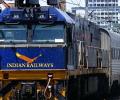
DIPP had proposed 100% FDI in Railways, which it had to now scale down to 74% in certain areas

Market place model of e-commerce means providing of an IT platform by an e-commerce entity on a digital and electronic network to act as a facilitator between buyer and seller.
Improved monsoon, solid fiscal performance, and capex push by the public and private sectors augurs well for India's macroeconomic stability and growth, the finance ministry's monthly economic review for June 2023 said. But the report said that while India's domestic fundamentals remain strong, negative cross-border spillovers and adverse global developments could act as a deterrent in achieving the high growth path this financial year. "An improved matching of aggregate supply and aggregate demand in the Indian economy underpins the progress made in the control of domestic inflation and the consequent strengthening of macroeconomic stability," the review said.

She said during Question Hour in Rajya Sabha that Bharatiya Janata Party got a massive mandate on the basis of its election manifesto which opposes FDI in multi-brand retail.

Bharatiya Janata Party, Communist Party of India and Janata Dal-United on Tuesday come together to launch a national campaign against FDI in retail and sought support from the people to make the movement against the government's "anti-people" policy a success.
Position as most-favoured destination moves down a notch to fourth, says Unctad report.

Prime Minister Narendra Modi on Friday said his government has within 100 days in office steered the economy out of a "difficult situation" and brought stability, and promised to remove roadblocks to foreign investment.

The new Consolidated Foreign Direct Investment Policy, effective from April 1, limits FDI in defence units to 26 per cent. But the Department of Industrial Policy & Promotion of the commerce ministry is in favour of raising this limit.

According to the decision, such entities can now first operate through e-commerce and then open brick-and-mortar stores.

100 per cent FDI is now allowed in almost every major TV distribution form (direct-to-home, cable, headend-in-the-sky, multi-system operators) and 49 per cent in TV news.
India received foreign direct investment (FDI) worth $1.79 billion in February, 2013 -- a decline of about 19 per cent due to global economic slowdown.
Commerce and Industry Minister Piyush Goyal on Monday said the existing foreign trade policy (FTP) will be extended for six months till March 31 next year. The government had earlier extended the FTP 2015-20 until September 30 this year due to the Covid-19 crisis. The FTP provides guidelines for enhancing exports to push economic growth and create jobs.

While the UN report said that FDI inflows rose 6 per cent in 2018 to $ 42 billion, the government's own data for the entire FY19 period has shown that inbound equity investments declined for the first time in six years in FY19.

In October 2011, the country had attracted FDI worth $1.16 billion.

While welcoming Prime Minister Narendra Modi's announcement on Saturday to celebrate January 16 as National Start-up Day, six years after the Start-up India Action Plan was launched by the government, stakeholders in the ecosystem say that more needs to be done at the policy level to unleash the next phase of growth in the sector. "The Start-up India programme's launch in 2016 was a turning point - that is when the promoter came to be known as the founder in the country and the word 'entrepreneur' entered the common lexicon. "But now we need a Start-up India 2.0 now for the next phase of growth of the ecosystem", said Siddarth Pai, managing partner of venture capital (VC) firm 3one4 Capital. Pai says that Startup India 2.0 must look at promoting Startups headquartered in tier II,III & IV cities and solving the problems of Bharat.

In a major reform push, government on Thursday approved 100 per cent foreign direct investment (FDI) in the telecom sector, meeting a key demand of the fund-starved industry.

"Not a single step has been taken by this government to empower small businesses in India," says Praveen Khandelwal, national secretary general of the Confederation of All India Traders and former treasurer of the Bharatiya Janata Party's Delhi unit.

Seeking to spur foreign investments, Finance Minister P Chidambaram has said the Union Cabinet will decide on raising FDI caps in different sectors in the third week of this month.
Foreign direct investment in India has seen unprecedented growth in the recent years. FDI's contribution in India's GDP too is on the rise.

Representatives from four states including Maharashtra and Karnataka will also be members of the panel.
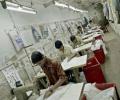
FDI inflows into services sector grew by about 47 per cent to $2.64 billion in April-January last fiscal.

Despite the uncertain economic environment globally, FDI in India surged 50 per cent to USD 20.76 billion from January-August, according to the industry ministry's latest data.

Union Finance Minister Nirmala Sitharaman, along with her team of bureaucrats, delved into the fine print of the 2024-25 Budget documents in a press conference, detailing the government's road map on bringing down the debt-to-GDP ratio and bold tax measures.

India Inc has expressed strong displeasure over the Delhi government's decision to withdraw approval to FDI in multi-brand retail, saying the move was likely to hinder foreign investments flowing into the country.

The Union ministry of agriculture and the department of land resources under the ministry of rural development have given "in principle approval" to a proposal of the Department of Industrial Policy and Promotion (DIPP) to invite FDI for developing non-arable land through better technology into fertile and cultivable land.

Overall foreign inflows in the country rose by 27%.

FDI inflows into India were $34 billion in 2014, up 22%.

The dust over the controversy around foreign direct investment (FDI) in the defence sector appears to have settled.

Sectors that attracted maximum FDI include services, trading, automobile and power.
The Railway Minister has announced that there is an urgency to attract FDI in Railway projects.

The United Progressive Alliance government had opened the multi-brand retail sector for foreign investment and allowed up to 51 per cent foreign direct investment in the sector.

Foreign direct investment (FDI) in India almost doubled to $2.16 billion in December 2014, compared to $1.10 billion in the same month of 2013.

Sources said in order to address the security concerns, FDI proposals from Pakistan would be routed through the Foreign Investment Promotion Board.

Chaturvedi said the highest ever FDI flows received by the country were in FY12 at $35.12 billion while in four months of this fiscal alone we have crossed $10.75 billion.
The conditions imposed on prospective investors in the retail sector betray a lack of understanding of the dynamics of the business.

Tamil Nadu Chief Minister K Palaniswami on Tuesday launched new industrial and MSME policies aimed at providing further impetus to industrial growth by attracting more investments and also offering sops for development in the industrially backward districts.
 © 2026 Rediff.com - Advertise with us - Disclaimer - Privacy Policy - Sitemap - Feedback - About us - Terms of use - Grievances